Showing posts with label PORES. Show all posts

Saturday, November 10, 2012

PORES: How to Minimize Pores

LARGE PORES


Celebrities and models always look so gorgeously pore-less in the photos staring out at us from their magazine covers. They have pores just like the rest of us. Having pores is a non-negotiable part of having skin. In fact, we need to have them because they are essential to skin function.
Large pore size can be frustrating because it can interfere with an otherwise smooth quality to skin, and generally speaking, a large pore size is visually unappealing.


Why do we have large pores?

Your pore size is partly a matter of genetics and partly due to whatever is currently trapped inside of them. If you have a lot of oil or dead skin cells accumulating in your pores, that can stretch them out and make them look bigger.


And with most skin-related problems, the appearance of your pores can get worse due to sun exposure and aging. Both have a negative impact on collagen and elastin—the two components of your skin’s structural support system.

Exposure to ultra-violet rays creates molecules called free radicals that destroy your existing collagen and elastin. And one of the natural effects of getting older is that production of new collagen slows down. The combined effect means that what’s being damaged daily by sun exposure isn’t being repaired and rebuilt quickly enough.  When you lose support around your pores—because of a loss of collagen and elastin—they start to sag and look larger.


How can we minimize large pores?

As pore size is usually genetic, and there is not much you can do to make them permanently smaller. Do not fall for claims stating a product will reduce your pore size. However, there are some tips and tricks you can employ to temporarily minimize the appearance of pore size.

Here are the tips to minimize your pores:


1. Keep Your Skin Clean


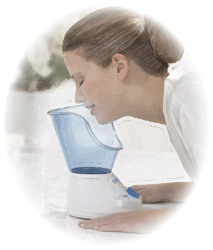
Exfoliate once a week to clean clogged pores. It is easier if you use facial steamer first then exfoliate gently. Clean pores look smaller.
You can use face washes, cleansers and masks which contain salicylic acid. It works to minimize pores by keeping them clear. It penetrates pores and helps to dissolve and dislodge oil, dirt and dead cells.


2.Use toner


Using a toner, or an astringent, after cleansing your face (before moisturizing) can help reduce the appearance of large pore size. Astringents constrict pores as well as help remove that last bit of oil and dirt. 


3.Use sunscreen daily


It is one of the few things you can do to help keep the skin's support structure strong and pores minimized. Look for a daily moisturizer that contains a broad-spectrum sunscreen and an SPF of 30 or higher. 


4.Use retinoid
 
Pore-Minimizing Secrets


Whether it is an over-the-counter retinol or a prescription-strength Retin-A, the active ingredient helps stimulate new collagen production in the skin. More collagen means better skin structure, and that means pores don’t sag and look larger.


5.A Little Makeup Help


Start with a primer to help smooth out the appearance of the skin and fill in pores so that foundation goes on flawlessly. Mineral powder foundations can give an airbrushing effect to the skin. For the most pore-minimizing coverage, apply it with a dry makeup sponge, pressing the powder firmly into the skin, and then buff off any excess with a large powder brush.


*****Follow this skin care regimen carefully if you are self conscious about your pores. You will observe your pores get cleaner and smaller, and your skin look much healthier.***** 


Friday, September 21, 2012

RETINOIDS: Anti-aging Vitamin A

Retinoid


Studies have shown that the vitamin A derivatives known as Retinoids (retinoic acid) unplug pores, help clear up acne, reduce fine lines, boost the production of collagen, lighten brown spots and freckles, and improve skin texture.


RoC RETINOL CORREXION Deep Wrinkle Night Cream
Before and After Using Retinoid Creams

The retinoids – which have even been shown to help treat precancerous skin lesions -- is sold by prescription only under names that include Renova, Retin-A, and the generic Tretinoin.


A retinoid should be the foundation of any topical antiaging regimen.


Men and women should make a retinoid part of their evening regimen beginning in their 20s.

The downside is that retinoids can initially cause dryness, flaking, and redness.


Dermatologists say that starting out slowly, applying a pea-sized amount of retinoid every second or third night, can help your skin adjust to the powerful ingredient.


Or consider an over-the-counter cream, gel, or serum containing retinol. This nonprescription version of a retinoid works more gradually and gently but is still effective in rejuvenating your skin.

Serum Containing Retinol

Vichy LiftActiv Retional HA


Bombarding your skin with lots of different ingredients can be irritating. What’s more, used in combination, some ingredients will cancel out each other’s benefits.

For example, the acid in salicylic or glycolic acid breaks down ingredients like retinol, hydroquinone, or Vitamin C. More is not necessarily better.
 
The products necessary for beautiful skin aren’t glamorous, and include a simple cleanser, sunscreen, moisturizer, and a retinoid or retinol.


http://www.dermadoctor.com/wp/wp-content/uploads/2012/04/RRR.jpg


Skin Benefits of Tretinoin (Retinoic acid)


1.  Increased collagen stimulation: Avoiding Wrinkles

Tretinoin directly stimulates collagen formation by inhibiting collagen breakdown.  It increases extracellular collagen formation by 80% in the papillary dermis when used for 1 year!  The clinical effects relate to smoother and softer skin texture with a decrease of fine lines and wrinkles. So, it is one of the best anti-aging cream we can find.


2.  Protection from sun exposure

Tretinoin prevents breakdown of collagen from ultraviolet exposure.  It is still important to sun protect with an effective sunscreen.  


Apply Retinoids at Night and Sunscreen in the Morning


3. Treatment for Acne

Topical retinoid medications are useful for treating blackheads and whiteheads by helping to open clogged pores. Examples of these are tretinoin (brand name Retin-A), adapalene (brand name Differin) and tazarotene (brand name Tazorac).


Before and After Using Tretinoin


4.  Improves Pigmentation

Tretinoin increases cell turnover thereby removing epidermal cells containing pigment (melanin) giving a less pigmented appearance.  This increase of cell turnover also allows better penetration of a topical bleaching agent (hydroquinone) when used in combination.
It is important to remember to clean the face 20-30 minutes before application of tretinoin since application while the face is damp will increase sensitivity.
The third generation retinoic acids are the newest additions, adapalene (Differin) and tazarotene (Tazorac).


Adapalene (Differin) has less retinoid dermatitis than tretinoin, but it works primarily for acne and does not help a lot for photodamaged skin.


 Tazarotene (tazorac) has similar results as tretinoin in that it helps improve wrinkling, pore size, textural irregularities and hyperpigmentation.


So my recommendation is to use a form of retinoic acid at night before you sleep. There are generics available for Retina-A (tretinoin).  Apply a thin layer of tretinoin to your face and neck to help stimulate dermal collagen and help with cell turnover.


From time to time, your skin will peel, in which case, skip one night and reapply the next night.  To some degree you can think of topical retinoids as your own chemical peel.


Tuesday, September 11, 2012

MINERAL MAKEUP: Healthy Makeup


MINERAL MAKEUP


Mineral makeup is a new cosmetic trend that emphasizes natural health and being eco-friendly by using organic ingredients. Mineral makeup is mostly made up of natural minerals. It does not contain any chemicals, additives, animal byproducts, talc, oil, synthetic fragrances, and other manufactured skin irritants. Mineral makeup is made by pulverizing sterilized minerals into a fine powder that is mixed with natural pigments to produce various shades.


Synthetic ingredients have a negative impact on the skin causing such problems as acne, blackheads, clogged pores, skin irritations, and dry skin. As well, some artificial colors are known as carcinogens. With natural makeup, there is a significantly reduced risk of allergic reactions and acne break outs. The minerals in the makeup consist of titanium dioxide, zinc oxide, and iron oxide. Iron oxide gives color to the makeup. Titanium and zinc are a natural anti-inflammatory, and titanium dioxide is a natural sunscreen and provides an SPF of 15 to 20.


Most mineral foundations consist of a foundation, concealer, powder and sunscreen. It is great for women with sensitive skin as it provides enhanced skin care. Manufactured make-up tends to be heavy on the face and can cake up on the skin. Organic makeup’s texture is lighter, more natural, and allows your skin to breathe. It is based on a hypoallergenic loose powder that naturally nourishes and protects the skin.


Mineral makeup does not enhance wrinkles like traditional powders. If you have fine lines, wrinkles, or crow’s-feet, the minerals will not accentuate them, but instead, aid in smoothing and covering them up. As well, it is rich in vitamins, antioxidants and ingredients that hydrate the skin and conceal wrinkles. The result is silky, soft, smooth, and healthy skin with a youthful and glowing appearance.


There benefits of wearing organic make over manufactured mass produced makeup are numerous. It does not harm and aggravate the skin with damaging chemicals, oils and chemical additives. As well, it does not obstruct the skin’s pores or create a breeding ground for bacteria, and it protects the skin from damaging UVA rays. It provides the wearer with a natural appearance.


NATURAL APPEARANCE WITH MINERAL MAKEUP


Organic makeup is fast becoming the new choice in beauty care as the ingredients benefit the skin. Most women report that wearing mineral makeup feels like they are not wearing any makeup at all. The minerals benefit the skin as they soothe and alleviate itchy, inflamed, red, bruised, and flaking skin. It also cools the skin and promotes quicker healing time. It will not aggravate your skin even if you sleep while wearing it. As well, it is an affordable way to nourish your skin and get the same quality of skin texture as you would in an expensive spa.


Mineral Eye Makeup
For people with sensitive skin or eyes, mineral eye makeup is an excellent option. In some cases people with sensitive skin or allergies have reported reactions to mica or bismuth oxychloride, so always check the labels carefully and either avoid these ingredients or get a sample to test before purchasing.


Benefits of mineral makeup
Mineral makeup doesn’t contain any magic ingredient that heals the skin. Its core ingredients, such as mica and titanium dioxide, are used in most makeup. However, it doesn’t have fragrances or binders that may irritate the skin. It may also be beneficial for people who have acne, since titanium oxide has anti-inflammatory properties, and it doesn’t clog pores. Titanium oxide is also used in sunscreen, so it does have some sun protection (but not enough that you don’t need additional sunscreen).
Mineral makeup’s powder formulation also makes it easier for women to choose (or at least mix) shades that approximate their natural skin tone.
 
Disadvantages of mineral makeup
Some people say that the colors can look ashy on darker skin tones. Others complain that it can dry the skin, and may accentuate wrinkles.
Additionally, mineral makeup isn’t something you can apply in the car. You need to pour a bit of the powder from the  lid of the container, and use a kabuki brush or a large fluffy brush to apply.


Mineral makeup has transformed the cosmetic industry. It used to be only available at chic spas, but now mineral makeup is available to everyone. In the past few years, mineral makeup has become extremely popular with women of all ages. Wearing mineral makeup will make you look and feel fantastic.


Thursday, September 6, 2012

Blackheads: How to Get Rid of Blackheads


Blackheads
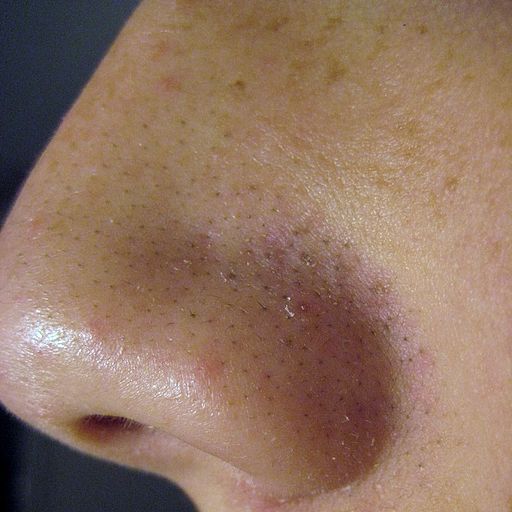
Blackheads on the Nose Area


What are blackheads?

A blackhead, or open comedo is a wide opening on the skin with a blackened mass of skin debris covering the opening. Despite their name, some blackheads can be yellowish in color. A comedo is a widened hair follicle which is filled with skin debris (keratin squamae), bacteria and oil (sebum).

A closed comedo is a whitehead, while an open comedo is a blackhead. the plural of "comedo" is comedomes".

Blackheads are said to be the first stage of acne. They form before bacteria invade the pores of the patient's skin. A blackhead can develop into a pimple, which is also known as a papule or pustule.


What causes blackheads?


If the skin is not cleaned properly, more blackheads can appear, especially during those milestones in life when they are more prevalent, such as puberty. Improperly cleaned skin makes it more likely that dead skin cells build up within the pores. The pore openings can become clogged, which accelerates the build up of oil inside - thus causing blackheads to form. However, many experts warn that dirt does not cause blackheads to form - which frequently confuses and frustrates patients. Blackheads are caused by oxidized oil, not dirt. Over-cleaning the skin can lead to irritation.

In some cases, blackheads can emerge if moisturizers, sun screens, make up, or foundations are overused.

In the majority of cases, blackhead susceptibility is not heredity, with the exception of some severe acnes.


How to Get Rid of Blackheads


1) Hormonal treatments - contraceptives have often been used for the treatment of blackheads and acne, often with good results.

2) Cleaning the skin - clean your face with a good cleanser, ideally, one for oily skin, such as a salicylic acid cleanser.

You can give your face a steam to open up pores and next, make sure your hands are clean, then wrap small pieces of tissue around your fingers to protect your skin from your nails. Gently extract the blockage. If it doesn't come out easily, leave it. If you force the blackhead you risk aggravating or inflaming the skin and this might lead to scarring. Not a good plan if you can help it.


3) Medications - adapalene is a third-generation topical retinoid, used mainly in the treatment of mild to moderate acne. Many patients with blackheads have had good results. In the USA adapalene is available under brand name Differin, in three preparations - 0.1% cream, 0.1% gel, and 0.3% gel. Since 2010, it has also been available in the USA under the generic name Teva, (0.1% gel). Only the 0.1% cream and 0.1% gel forms are available in Europe.

4) UV exposure - exposing the skin to sunlight or ultra-violet light encourages it to peel, which helps unblock pores. Sunbathing or using sunbeds may help. However, it is important to discuss this with your doctor. Exposing skin to sunlight, if overdone, also raises the risk of burning and developing skin cancer.

5) Hair - greasy hair touching the face of your skin can spread infection and in some cases encourage the spread of blackheads and acne. Keeping your hair away from your face may help keep blackheads to a minimum.


Natural Homemade Remedies for Blackheads


1) First, you might want to try opening up your pores and letting the dead skin cells and oil come out naturally (Blackheads are caused when oil and dead skin cells get trapped in the pores. When the oxygen hits the sebum oil it turns black). Simply take a bowl of hot or boiling water, and hold your face about a foot away from the bowl (be careful not to put your face too close because you might burn yourself). For it to be more effective, place a towel on your head and allow the steam to seep in your pores and help loosen the debris in them. This softens your skin and makes it a lot easier for you to cleanse your face. Ideally the blackheads should come closer to the surface of the skin during this steam session.
 

2) As a second tip, take half a slice of lemon, squeeze the juice out of it and apply it to your face. Lemon juice is very acidic and its chemical reaction to your skin will decrease oil production. It can also eliminate bacteria that may trigger your blackheads in the first place.


In line with lemon juice, you can also create a paste with baking soda mixed with water. The mixture will assist in controlling the oil on your face and help kill the bacteria. Simply apply the baking soda solution where your blackheads are and let it soak for around 20 minutes. After which, wash all of it off and pat your skin dry.


3)One homemade mask is to crush some regular aspirin and then add a small amount of water to make a paste. You then apply the past to the affected area of the face and let the paste dry. Once dry you then gently wash the mask off with warm water. It is said that the natural acids contained in aspirin will soften the blackhead so that when you wash with warm water the blackhead will come out easily. 


4)Another homemade mask is made of equal parts of sugar and honey, you then heat the mixture until it bubbles. Once it bubbles let it cool just enough so that it can be applied to your face. Once you have the mixture applied, cover it with a cloth. Now let the mixture dry, once dry quickly pull the cloth from your face. The mask and blackheads should be removed as you pull the cloth from your face.


5) Aloe vera gel is also effective to remove blackheads.


The list of natural solutions are literally endless. These are a few home remedies to remove blackheads and and restore flawless condition of your skin. 


Sunday, September 2, 2012

FACE MASK: Once a Week Facial Skin Care

FACIAL MASK


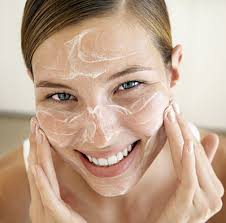
Getting a professional facial can be expensive, however you don’t always have to rely on other people to make you look beautiful; you can do it yourself in the comfort of your own home! Maintain your skin’s health by doing this at-home facial once a week. By applying face masks once a week, you clean up the pores, remove dead skin off your face, and get rid of your skin problems.

Here you will find the easy steps for applying your facial mask.


Step 1: Cleanse


Before beginning your facial, apply cleanser to wet face and throat in upward circular motions. Begin at the base of the throat and work upward into the facial area. Cleanse from the center line of the face, working outward towards the sides and gradually up to the forehead. Rinse thoroughly and then cleanse again to break down oil, dirt, and make-up. Rinse thoroughly again. Getting the dirt out is very important when it comes to keeping healthy and clear skin since dirty skin causes bacteria.


Step 2: Steam


When you get a professional facial done, they always steam your skin. Just with a simple facial steamer you can do it yourself too. Or if you don't have any steamer, simply boil some water  dip a washcloth and press to your face. Repeat this step about 2-3 times. This will open up your pores and make your face softer and easier to work with.


Step 3: Exfoliate
 Exfoliating is one of the most important steps in skin care because this is the part where you actually slough off dead skin cells that can pile on top of one another and cause flakiness, dry skin, and even pimples, depending on your skin type. Gently massage an exfoliating face wash into circular motion on your face, concentrating on the oily parts such as your chin and forehead.


Step 4: Mask Yourself

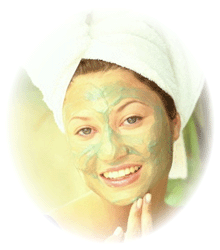
                                                             Apply a mask to your face. For dry skin, use a hydrating gel or cream mask and  for oily skin use a clay-based mask. Leave it on for 10-20 minutes (depending on the directions on the package), making sure to avoid the eye area when applying. Rinse off with warm water and pat dry.


Step 5:Toner


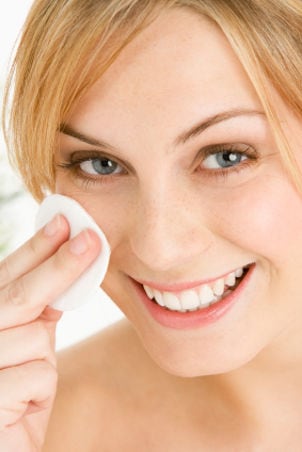
Apply by misting, patting, or using cotton pads to entire face and throat. Use fingertip tapping to cool skin. Toner will help to remove all traces of mask and will smooth down pores.


Step 6: Moisturize


The last and final step is to moisturize your skin. Make sure you choose one that matches your skin type. For example, if you have oily skin, go with a very light moisturizer as not to clog your pores. For dry skin, choose a thicker moisturizer. Massage gently over your face and neck using slow, circular motions.


You're done!!! Now you have a totally clean, soft and moisturized skin!!!
Related Posts Plugin for WordPress, Blogger...